
Searching for a Warrant in Williamson County
Williamson County has no public one-stop warrant search. The county links a criminal case search and jail lookup, while the Sheriff’s Warrants FAQ requires in-person photo identification or an attorney’s fax on official letterhead for county-held warrant confirmation. City municipal courts and four Justice Court precincts keep separate traffic, Class C, and failure-to-appear records.
Use the citation, cause number, issuing court, and date if you have them. Do not call or email the Sheriff’s Warrants Division for status; the county says it cannot give warrant information that way. A search result should lead to the court that controls the case.
- Start with the court or city on the citation, notice, or case paperwork.
- Use the county criminal-record search for case context, not as an active-warrant roster.
- Ask the named city court or JP precinct to check its own warrant and citation record.
- For Sheriff-held records, go in person with photo ID or have counsel use the official-letterhead fax route. A written PIA request is for a copy, not a recall.
- Use DPS/OmniBase only as a separate FTA/FTP check, then ask an attorney or issuing court what action is available.
Williamson County Warrant Searches Start With the Right Identifier
The county criminal-records link is official, but its live search fields were not independently confirmed during research. Do not assume it accepts a warrant number, date of birth, or every city citation. The public bail-form search is a separate Texas court resource and lists name, cause number, magistration location, offense, and action. Those fields help locate bail context, not every active warrant.
Georgetown’s municipal portal, by contrast, publishes several case-search modes, including citation with date of birth, name with date of birth, and plate with state. That is a city-court example only, not a countywide search form.
| Channel | Known input | Scope note | Next step |
|---|---|---|---|
| County criminal case search | Fields not confirmed | Case context, not a full warrant list | Ask the assigned clerk |
| Georgetown portal | Citation + DOB, name + DOB, or other listed modes | Georgetown Municipal Court only | Confirm status with its clerk |
| Cedar Park warrant page | Citation number + DOB | City list, weekdays updated | Contact Cedar Park Municipal Court |
| Sheriff confirmation | Photo ID in person or attorney fax | County-held records; no phone or email | Use issuing court for payment or recall |
Warrant Search Fields Explained
Because no countywide active-warrant form was found, the table separates confirmed local inputs from gaps. A city portal may ask for more detail than a county criminal case search. Use only the fields shown by the official court, and do not send personal data to an unofficial site.
| Field Label | Type | Required | Notes |
|---|---|---|---|
| Case or cause number | Text | Portal dependent | Use the number on the court paper. |
| Citation number | Text | City dependent | Cedar Park requires it with DOB; Georgetown warns its number is case-sensitive. |
| Date of birth | Date | Some city portals | Paired with citation or name on local screens. |
| Name | Text | Portal dependent | Georgetown offers first and last name with DOB; county fields are unconfirmed. |
| License or plate | Text + state | Georgetown mode | Alternative case-finding fields, not countywide warrant filters. |
Williamson County Search Results Need Court Confirmation
A case hit can show a filing, charge, or bail event without proving that a warrant is currently active. The county’s public bail-form resource includes an “Action” field, but that is not the same as a Sheriff service update. County research did not locate one shared warrant-number format, so do not infer a code from another court’s citation.
| Name | Match against the person’s own official paperwork. |
|---|---|
| Cause number | Use it to ask the assigned court or clerk for the file. |
| Magistration location | Shows a bail-search context, not necessarily the issuing court. |
| Offense and action | Read alongside the court docket and current warrant status. |
| Warrant status | Confirm directly with the issuing authority; no universal county field was documented. |
Williamson County DPS Checks Cover Reported FTA Matters
Texas DPS works with OmniBase on its Failure to Appear/Failure to Pay Program. A participating court may report an unresolved violation that blocks license renewal, but the program is not a statewide warrant database and does not include every Texas violation. DPS says license specialists cannot confirm a warrant.
Check the OmniBase individual status route only for its program scope, then contact the named court. A hold clearing after payment is a different event from a warrant being recalled.
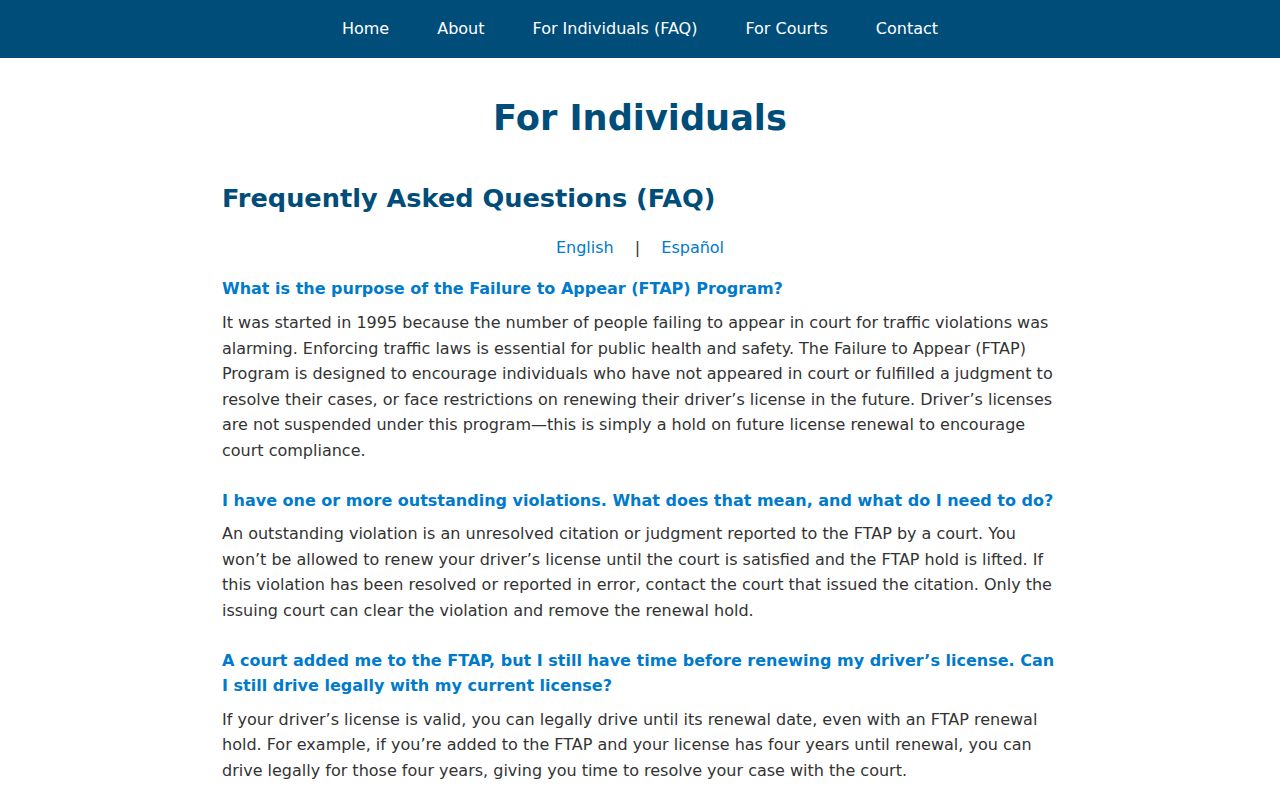
The issuing court remains the source for current case action and warrant status.
What a Warrant Search Shows
Public tools in Williamson County answer different questions. A court case search can point to a cause number and charge; a jail search concerns custody; a bail-form search reflects bail data. None should be treated as a full list of outstanding county and city warrants.
| Case reference | Cause or citation number helps route the inquiry. |
|---|---|
| Charge / offense | Read the court’s case entry; a charge is not a service update. |
| Issuing court | Identifies the office with authority over the case. |
| Bond action | May show bail context without resolving the underlying court file. |
| Current warrant status | Confirm with the issuing court or the Sheriff’s approved route. |
A Williamson County Case Search Is Not a Warrant Roster
The county Court Case Lookup links to criminal records and jail information, but the research review could not verify every field or update rule in the criminal interface. That limit matters: a docket entry can remain after a warrant is recalled, while a new or sealed item may not appear in a public search. The Sheriff also warns that city warrants may be held by local police.
When a result and a notice differ, ask the issuing court for the current docket and warrant action. Do not infer clearance from an empty search screen.
Where to Check Warrants in Williamson County
For county-held warrant confirmation, the Sheriff’s FAQ says to appear with photo ID or have an attorney fax a request on official letterhead. The Sheriff’s Public Records Center and written-request page are alternatives for a public record request; the county says the Sheriff is not the custodian of city records. County criminal case and jail links are useful for their own data, not a substitute for the controlled warrant check.
For a traffic or Class C matter, ask the municipal court or JP precinct printed on the citation. For a district felony, use the District Clerk and counsel. No public statewide warrant search joins these systems; DPS/OmniBase is limited to reported FTA/FTP matters.
Williamson County Public Requests Need a Narrow Description
A written request under the Texas Public Information Act should describe the record, agency, date, and case or citation number when known. The Sheriff offers an online Public Records Center and a written-request process; it may redact protected material or seek an Attorney General ruling. A public-record request asks for an existing record. It does not ask a judge to recall a warrant.
Ask the receiving office to route a request if the record belongs to another department. For a case-specific status or remedy, go back to the issuing court.
Restricted Warrants and Access Rules
Some records are withheld or limited. A sealed warrant, juvenile matter, or unserved investigative record may not appear in a public search. Texas law also permits an agency to withhold certain law-enforcement information. An empty result therefore cannot establish that no warrant exists.
Key Rules:
Texas Government Code Chapter 552 sets the public-information process and includes law-enforcement exceptions.
Texas Family Code Chapter 58 restricts access to specified juvenile records and warrant material.
Some unserved or sealed investigative records are not public; confirm an individual case through counsel or the issuing court.